Let all the world in every corner sing - Music Web International
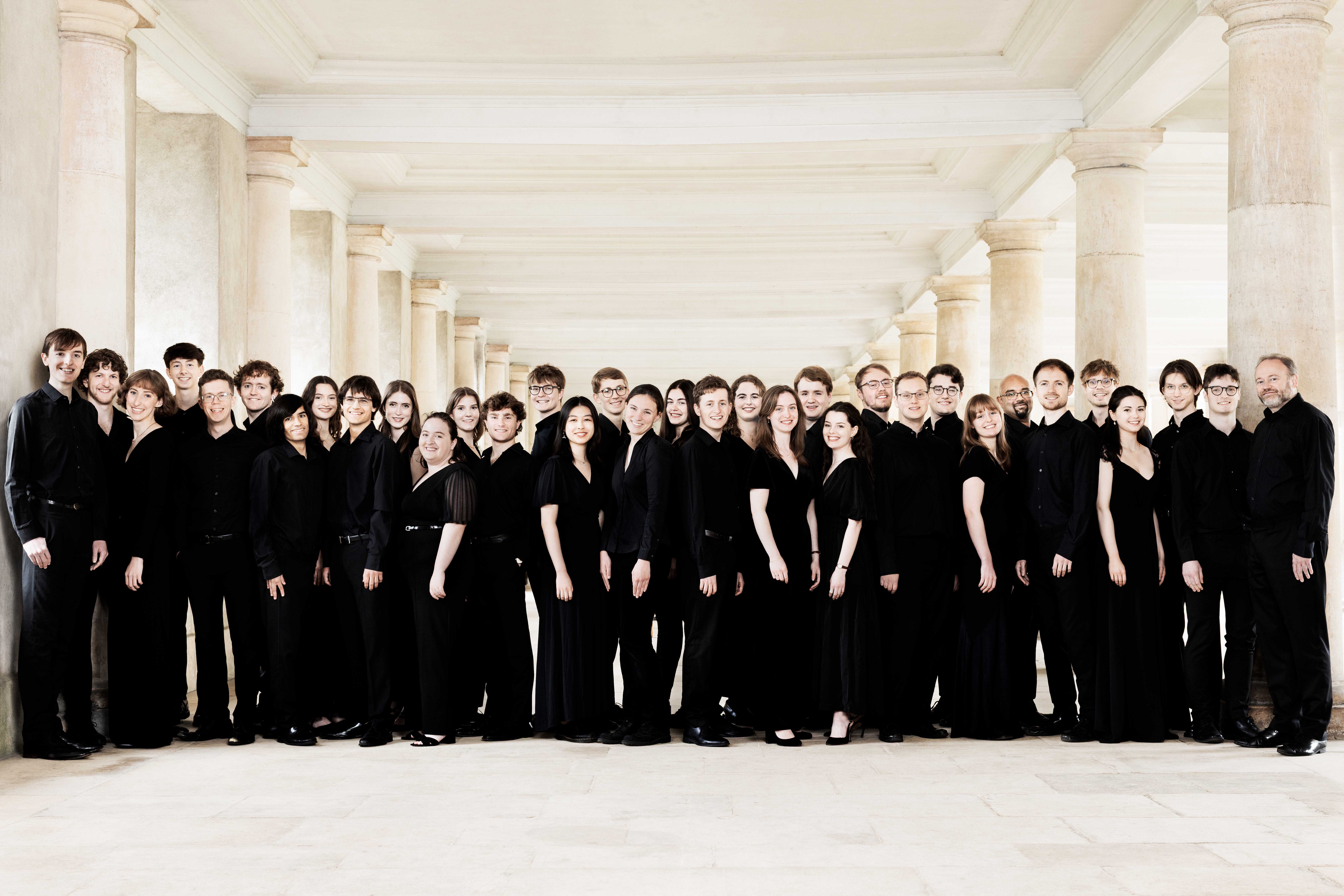
> See recording details...“Although it’s not described as such, I think I’m right in saying that this is the final album to be released by Choir of Trinity College, Cambridge under the leadership of Stephen Layton. Layton stood down from his post as Director of Music at the college at the end of the 2022/23 academic year; he had led the choir with distinction since 2006. For this album Hyperion has gathered together a selection of pieces recorded in January 2022 and in January 2023; the subtitle, ‘Great Choral Anthems’, is fully justified: here we have some of the most notable pillars of the Anglican choral repertoire.
Two things about the performances and the way they have been recorded really stood out for me. One is the often full-throated singing of the choir. As one would expect, there’s plenty of subtlety and nuance to their singing throughout the programme, but when required – at the start and conclusion of Balfour Gardiner’s Evening Hymn, for example – the choir really lets go, though with no hint of over-singing. The other ear-catching factor is the thrilling way in which producer Adrian Peacock and engineer David Hinitt – a seasoned partnership – have recorded the Ely Cathedral organ. Oftentimes, the full resources of the instrument make a superb contribution, but just as telling are some of the soft passages. Once again, we need look no further than the Balfour Gardiner. The majestic sound of the organ leading back to the opening music for the third stanza (‘Praesta, Pater piisime’) is truly exciting but just as rewarding are the soft, deep sounds made by the organ pedals in the transition to the mysterious second stanza of the hymn (‘Procul recedant somnia’); in these bars the organ, though at a soft dynamic, is a telling factor. This performance of Balfour Gardiner’s splendid anthem is a terrific opener to the programme.
In his notes, Jeremy Dibble refers to John Ireland’s Greater love hath no man as having “a scope and narrative that is redolent of a small cantata”. Though I’ve known and loved the anthem since I first sang it at school, decades ago, I must admit that I’d not thought of it in those terms but Dibble is right, I think. This Trinity performance is very good, though some may think that Stephen Layton imparts just a touch more urgency into the passage ‘That we, being dead to sin’ than we are accustomed to hearing. Here, and thereafter, the music is put across in a very dramatic fashion; this means that the reflective ending of the piece truly comes over as balm to the soul. Even more dramatic at times is the performance of Bairstow’s Blessed city, heavenly Salem. There’s an abundance of dynamic contrast, both from the choir and from Harrison Cole at the organ console. I was gripped by the attack from the male singers at the start of the third stanza (‘Bright the gates of pearl are shining’). The final stanza includes a lovely, warm-toned solo from soprano Helena Paish, who had earlier impressed me with her brief contribution in the Ireland. Jeremy Dibble tells us that Bairstow wrote the piece, in 1914, for the combined choirs of two Bradford churches. Of course, in those days a great number of Anglican parish churches boasted substantial and good choirs but even so, as I listened I reflected that these Bradford singers must have been an accomplished group to deal with Bairstow’s demands.
Layton has chosen two of Charles Wood’s anthems. His choice is vindicated not only by the quality of the music but also because the two pieces contrast strongly with each other. O Thou, the central orb is well-known, and rightly so; it’s a splendid anthem which here receives a highly committed performance. Expectans expectavi is perhaps less familiar but it’s an eloquent, if deliberately subdued piece. Wood composed it in memory of two young men who were slain in World War I. One of these was his own son, Patrick. The other was Charles Hamilton Sorley, the son of a close friend of Wood, who was a fellow Cambridge academic. Wood chose to set a poem by Charles Sorley and turned it into what Jeremy Dibble justly describes as a “moving elegy”. Layton obtains highly expressive singing from his choir.
Most of the pieces on this programme have been staples of the Anglican repertoire for a century or more but Layton has included some more recent offerings as well. Kenneth Leighton’s Let all the World in Every Corner Sing would fall into this category, even though it is now sixty years old (it dates from 1965). It’s a terrific piece; both the music and this performance are bursting with energy. I really admire the rhythmic vitality in this performance; it’s just what the music demands. Jonathan Dove’s Seek him that maketh the seven stars is an even more recent composition; it dates from 1995. Its inclusion here is particularly appropriate, not just because it’s a jolly good piece but also because Dove is an alumnus of Trinity College. In the opening pages both the choir and organist impart mystery and a sense of space to the music. Later on, when the pulse quickens, the performers are alive to the need for rhythmic precision and energy.
Before the final choral piece, we hear a substantial organ solo. I’ve long been an admirer of the music of Matthew Martin so I was keen to experience for the first time his St Albans Triptych. This was written for the 2019 St Alban’s International Organ Competition. Jeremy Dibble references a number of composers who have written tripartite organ works. He traces the line back to Bach but particularly mentions a number of French composers, one of whom is Jehan Alain; that’s particularly apt because I discovered not long ago when reviewing an outstanding disc on which Matthew Martin plays organ music by Duruflé and Alain that the latter’s music is very close to his heart. The three movements of Martin’s work, which here plays for 11:31, are Introduction with Dances – Intermezzo. Lamento – Fugue. The first movement is well described by Dibble as a “demonic dance” but partway through there’s ample contrast as both the music and performance relax somewhat. The middle movement is a solemn, measured processional; the music is rather subdued in character. The Triptych concludes with a four-part fugue of significant intricacy. Jeremy Dibble points out that towards the end of this movement thematic elements from the first two movements are woven in. The work as a whole calls for conspicuous virtuosity; Harrison Cole gives an exciting performance, which is marvellously captured in the recording.
In conclusion we hear another Bairstow anthem, Lord, thou hast been our refuge. This is one of many significant anthems which have been composed over the years for the annual Festival of the Sons of the Clergy. Bairstow received this commission for the 1916 Festival. I don’t know if the text was specified or whether he chose it himself but the words from Psalms 90, 144 and 102 were particularly appropriate to a time of tribulation; of course, in 1916 Britain was in the midst of the Great War. Though Bairstow’s music has moments of no little power – cries for divine assistance – the overall mood is sober and reflective, culminating in a heartfelt plea, ‘Comfort us again, now after the time that thou hast plagued us, / and for the years we have suffered adversity’. In this performance the concluding ‘Amen’ seems to be sustained for ever. This excellent and sensitive performance is a very fine conclusion to a distinguished recital.
If, as I believe to be the case, this is the last CD which will feature the Choir of Trinity College, Cambridge under Stephen Layton’s direction, it is a very satisfying final instalment to what has been by any standards a distinguished and enriching discography. Many of their recordings together have featured enterprising, unfamiliar repertoire but I think it’s fitting that the partnership should end with a splendid selection from the standard Anglican repertoire. The choir is on marvellous form throughout, singing with discipline, great accomplishment and palpable commitment. In the organ loft Harrison Cole and Jonathan Lee share the duties; they play superbly.
As I’ve already mentioned, the recorded sound is top-drawer.
You may already have multiple recordings of most if not all of the anthems on this programme but do not pass it by on that account. This is a most rewarding disc.”
John Quinn

Hyperion Records CDA68454